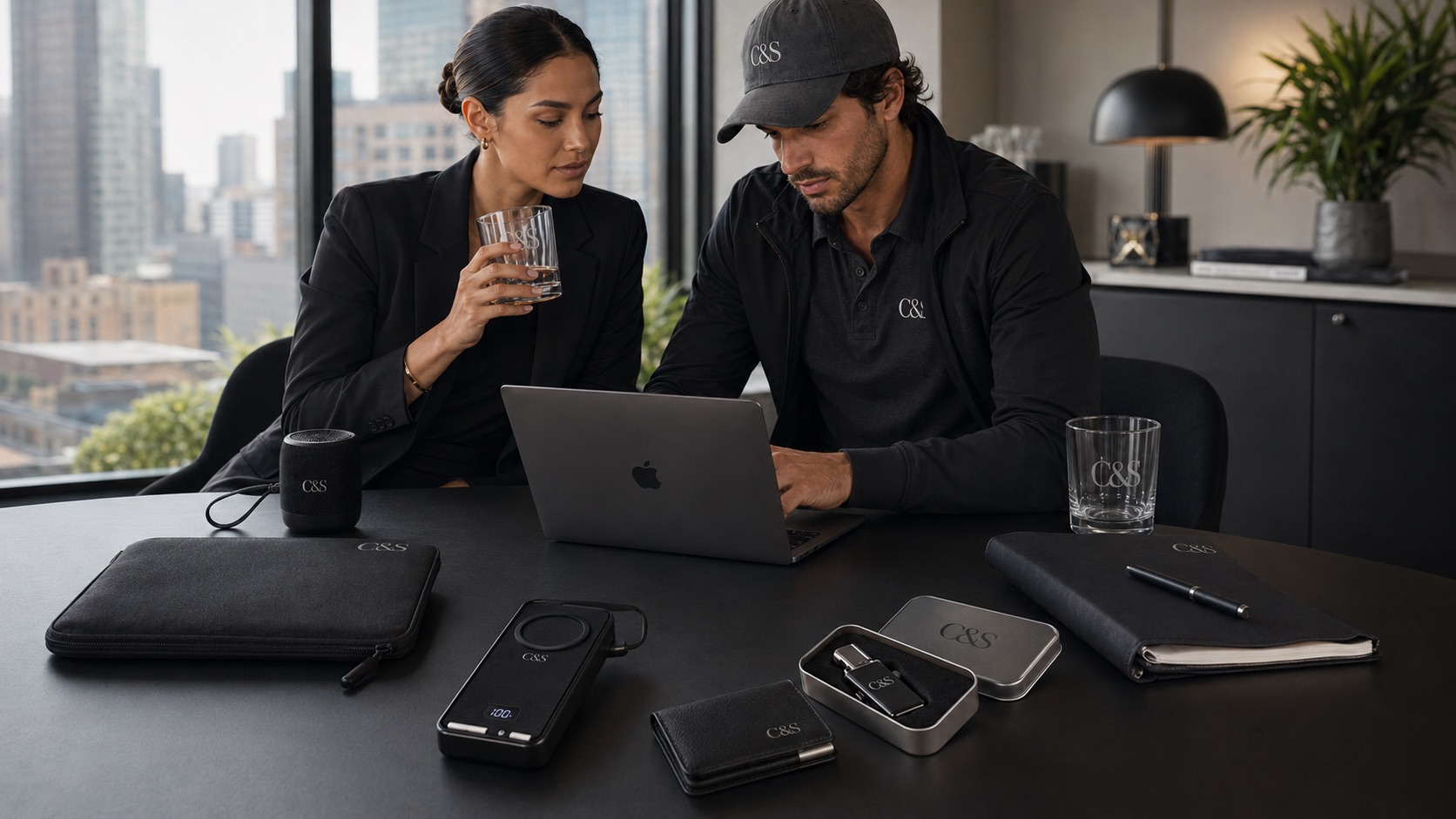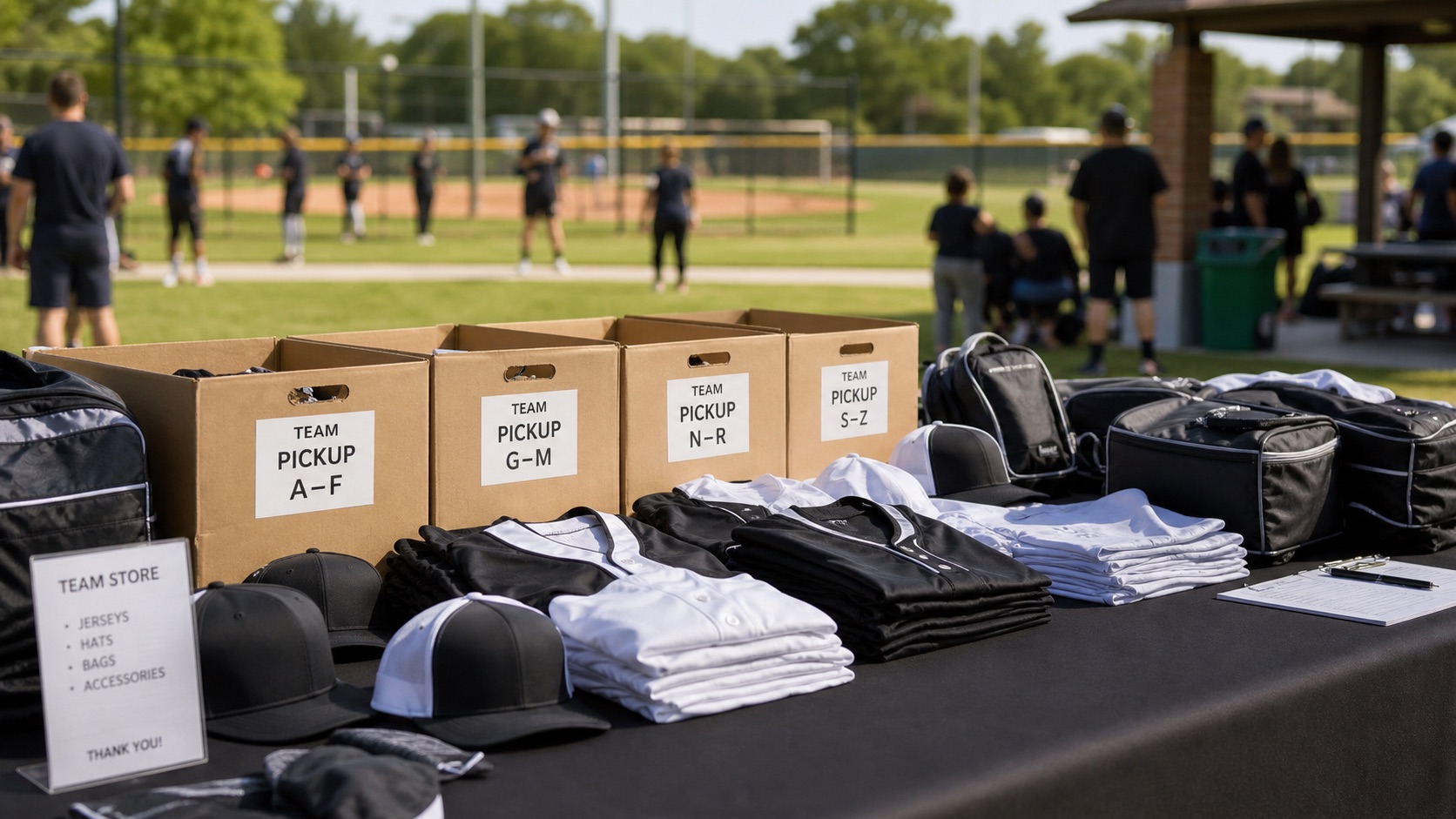
A Fortune 500 HR department ordering onboarding kits and a youth travel basketball program ordering uniforms have almost nothing in common on the surface. But operationally, they face identical challenges: collecting sizes from individuals, managing a budget, enforcing approved products, hitting a deadline, and handling the inevitable exceptions (wrong size, late joiner, lost package).
The promotional products industry calls these "group ordering programs," and they represent roughly $7.4 billion of the $26.1 billion U.S. promo market (ASI estimates). Yet most platforms treat corporate and team/organization orders as fundamentally different products requiring different tools. They are not. The underlying operation is the same.
Size collection alone accounts for 35% of admin time in group orders. A single 50-person team store generates an average of 23 back-and-forth messages just to confirm sizes and shipping addresses.
The five universal problems
Problem 1: Size and preference collection. Whether it is a corporate team of 50 needing polos or a swim team of 80 needing parkas, someone has to collect individual sizes, color preferences, and sometimes names for personalization. Without a system, this becomes a spreadsheet that the admin maintains by hand — and it is always out of date.
Problem 2: Budget control. Corporate programs have per-employee allowances ($150–500/year is typical for mid-market companies). Sports programs have registration fees that partially cover gear. Both need a system that enforces spend limits without requiring manual approval of every single order.
Problem 3: Product control. Not everyone should be able to order everything. New hires get the onboarding kit. Managers get the premium jacket. Athletes get the team uniform but can add optional spirit wear. The catalog needs rules — and those rules need to work without an admin manually approving each request.
The numbers behind team programs
Average order value for corporate company stores: $45–85 per transaction (Boundless 2023 data). Average order value for team stores (sports, schools, organizations): $65–120 per transaction — actually higher because team gear often includes outerwear and bags.
Return/exchange rate for company stores: 8–12%. For team stores with proper size collection: 3–5%. The difference is not the audience — it is whether the system collected accurate information upfront. Programs that use digital size forms with visual guides see exchange rates drop by 60% compared to "just pick your size" dropdowns.
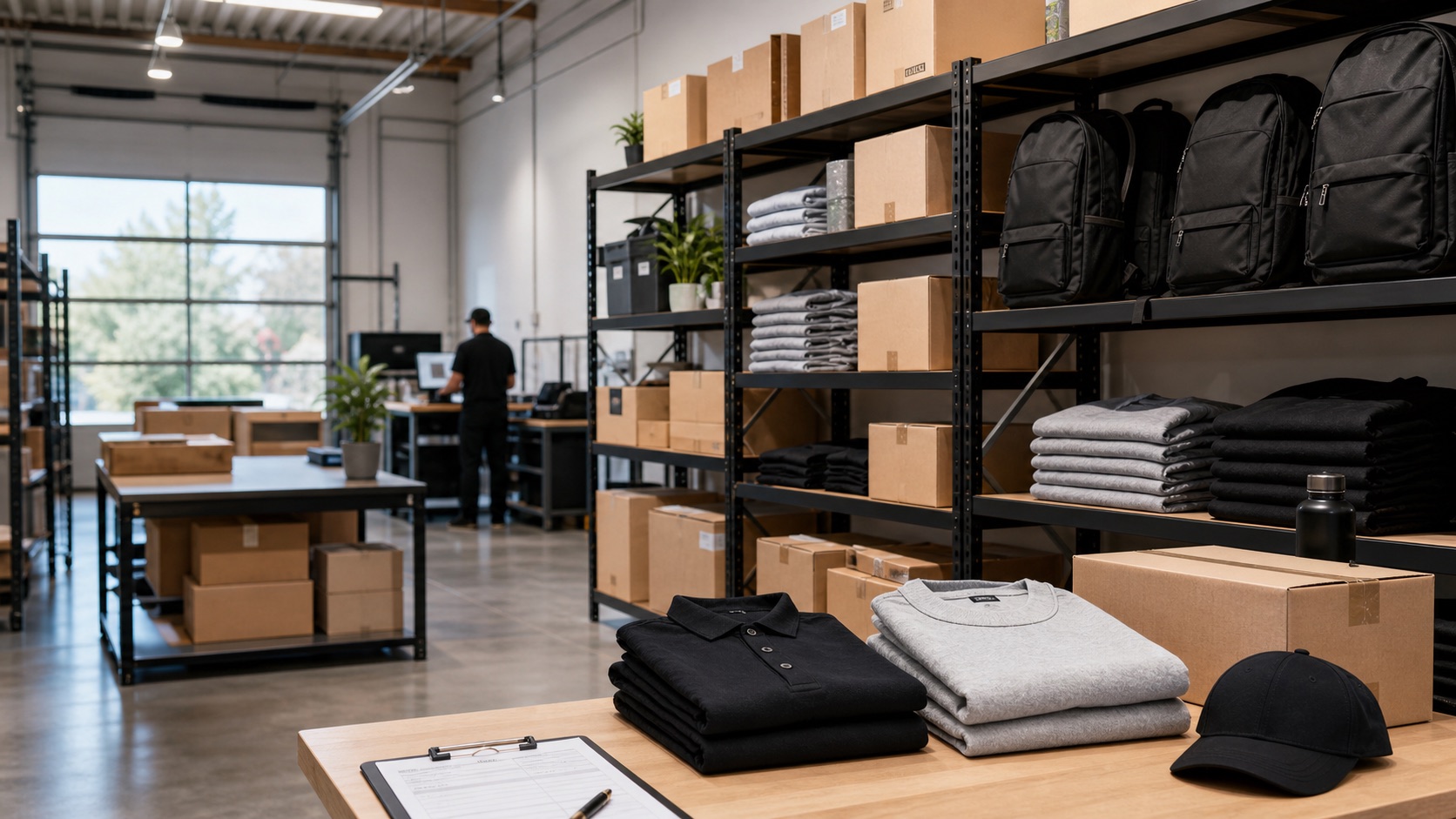
Fulfillment speed expectations: Corporate programs typically accept 7–14 day delivery. Team programs often need a hard deadline (season start, tournament, first day of school). Programs that source and decorate ahead of the ordering window — holding inventory ready to ship — can fulfill in 2–3 business days instead of 2–3 weeks.
What a unified program looks like
The best programs — whether corporate or team — share four traits: (1) Individuals can order from an approved selection without admin intervention. (2) Budgets or payment rules are enforced automatically. (3) The admin has a single dashboard showing what was ordered, by whom, and where it is. (4) Exceptions (returns, additions, rush orders) are handled by the operator, not the admin.
When these four things work, the admin spends 1–2 hours per month on the program instead of 10–15. That is the difference between a merch program that scales and one that collapses under its own weight once you pass 75–100 participants.